elite real estate
Industry
Real estate
ROLE
UX Designer
EXPERTISE
UX/UI Design
YEAR
2023
Project Description
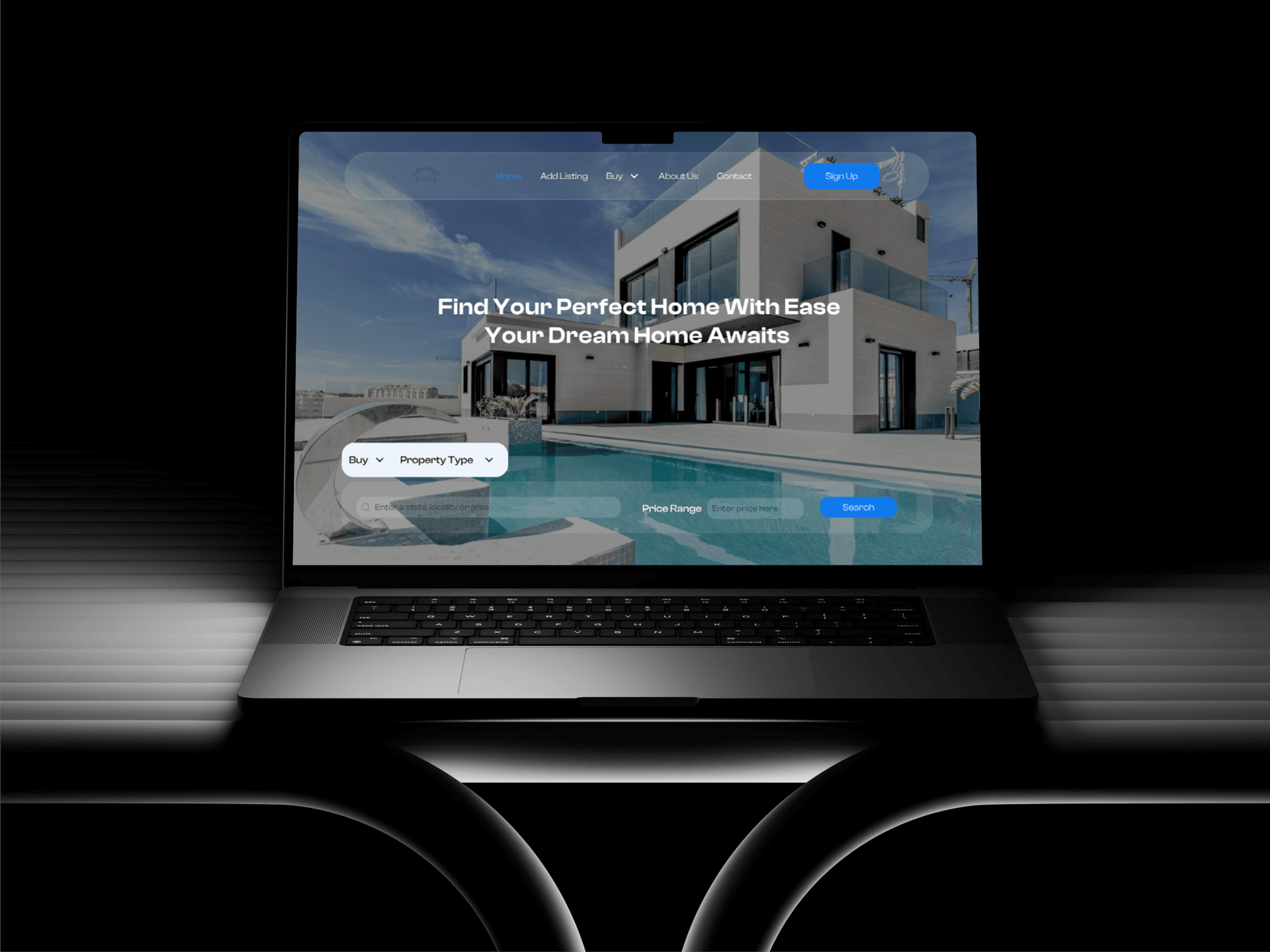
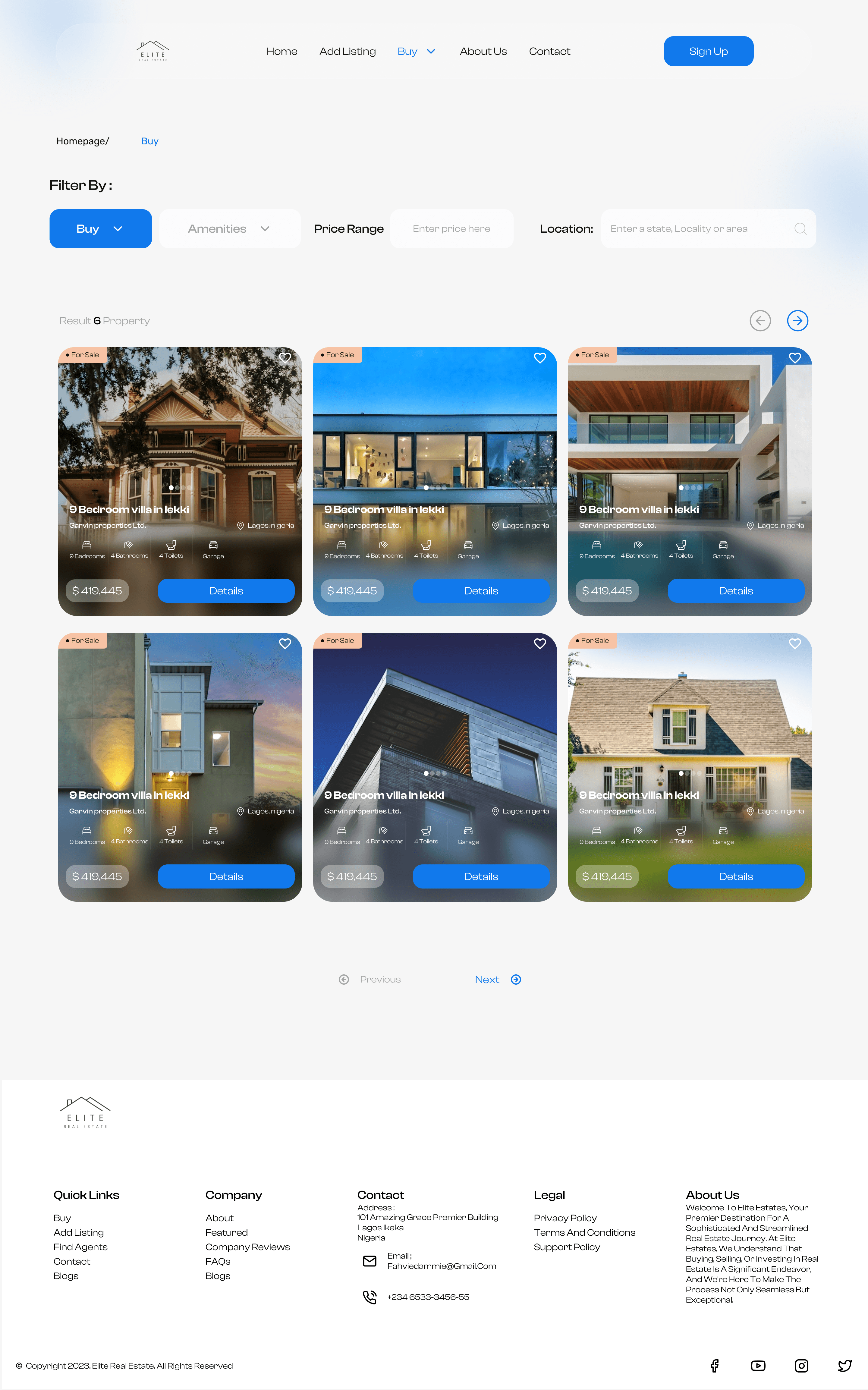
Elite Real Estate is a comprehensive property marketplace that transforms the home-buying experience. The platform combines powerful search filters, interactive maps, and rich property profiles all delivered through a responsive design that works flawlessly across devices.
Timeline
Initial build (2023) → Complete redesign (2025)
Process
this is the process I took to achieve Elite real estate website:
Problem Statements
When I first entered the real estate digital space, I identified several critical pain points that users consistently faced:
Overwhelming Information: Users were drowning in countless listings without effective ways to narrow down their options. The sheer volume of properties made decision-making exhausting rather than exciting.
Transparency Issues: Critical details about properties, pricing, and legal considerations were often incomplete or difficult to find. Users couldn't get a complete picture without multiple calls or site visits.
Poor Navigation: Existing platforms made it unnecessarily complicated to find properties that matched specific criteria. Filters were limited, search results were irrelevant, and the user journey felt fragmented.
These challenges left users feeling uncertain and overwhelmed, struggling to trust the information they found and unable to efficiently navigate the complex real estate marketplace.
The Big Question
How might we create a property marketplace that empowers users to make confident decisions while reducing the stress and confusion of home-buying?
Research & Discovery
Competitive Analysis
I began by analyzing the current market landscape, examining both direct competitors and adjacent industries for inspiration.
Key Platforms Analyzed:
Traditional real estate portals (Zillow, Realtor.com, Trulia)
Boutique property platforms
International property marketplaces
Major Findings:
Most platforms prioritized quantity over quality in search results
Filter systems were either too basic or overwhelming
Property details lacked consistency across listings
Mobile experiences were often afterthoughts
Map integrations felt disconnected from the browsing experience
Opportunity Identified: There was a clear gap for a platform that balanced comprehensive information with intuitive navigation, all while maintaining visual clarity and trust.
Information Architecture
Before diving into design, I mapped out the entire user journey and content structure to ensure logical flow and discoverability.
Key Structural Decisions:
Simplified Navigation: Three primary pathways (Search, Saved Properties, Profile)
Progressive Disclosure: Basic details upfront, with deeper information accessible on-demand
Contextual Filters: Search refinements that adapt based on user behavior
Unified Property Pages: All critical information consolidated in scannable sections
The architecture prioritized getting users to relevant properties within 3 clicks while ensuring no essential information was buried.
User persona
Throughout this case study stage, I conducted substantial quantitative user research, encompassing both complex and more straightforward queries, to acquire a greater understanding of our target demographic and create services suited to their needs.
this is the process I took to achieve Elite real estate website:
Solution
To address these challenges, I focused on creating a streamlined, user-centric platform that prioritizes clarity and ease of use:
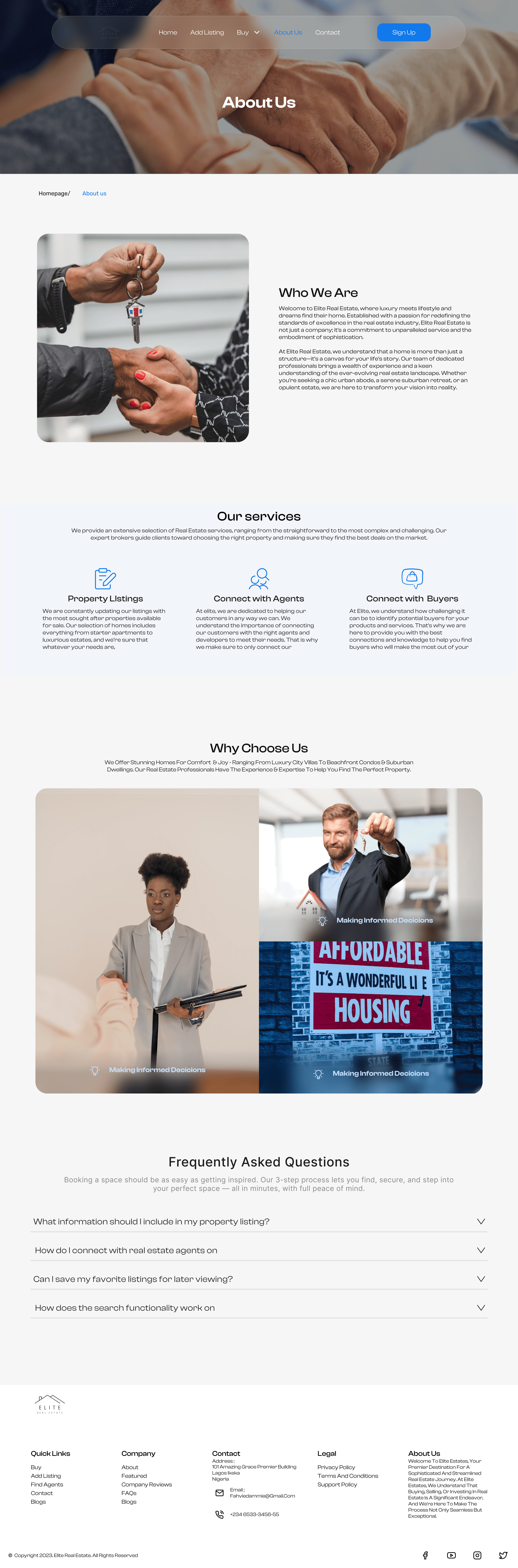
A clean, modern interface that reduces cognitive load while browsing
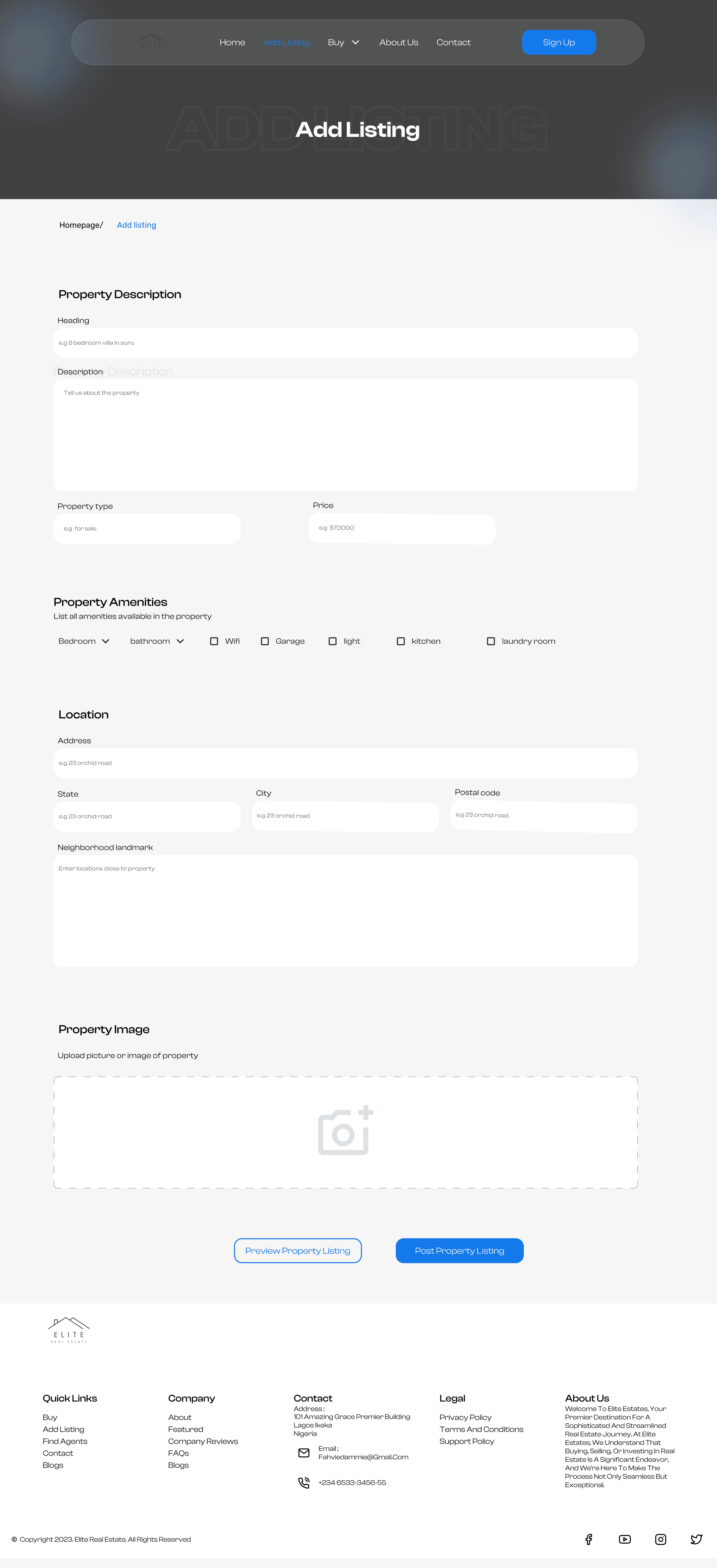
Comprehensive yet clearly organized property information
An visually appealing homepage that immediately engages users
Educational blog content to empower users with knowledge about the real estate process
Users found relevant properties 70% faster than on competitor platforms.




Key takeaway
This project reinforced the importance of user-centered design in complex domains like real estate. By deeply understanding user pain points and iterating based on real feedback, we created a platform that doesn't just display properties—it empowers confident decision-making.
Key Takeaways:
Research is non-negotiable: Every design decision should be backed by user insights
Simplicity is sophisticated: The best solutions make complex tasks feel effortless
Transparency builds trust: In high-stakes scenarios like home-buying, honesty is the best design strategy
Iteration is infinite: Launch is just the beginning of the design journey.
The Journey: Then and Now
I built the initial version of Elite Real Estate two years ago as one of my early projects in tech. At the time, I was proud of what I had created—and rightfully so for where I was in my journey. However, after spending two years working in the tech industry, gaining invaluable experience, and evolving my skills in UI/UX design, I returned to this project with fresh eyes.
What I saw surprised me. The platform I had once considered polished now revealed numerous opportunities for improvement. The interface that seemed intuitive back then now felt cluttered in places. The user flows I thought were seamless actually contained friction points I hadn't recognized. The visual hierarchy could be stronger, the spacing more intentional, and the overall experience more cohesive.
This realization sparked a complete redesign initiative. I systematically worked through every page, reimagining each component with the expertise I've gained over the past two years. I refined the visual design to create a more appealing aesthetic, simplified navigation patterns to ensure a truly seamless user experience, and paid meticulous attention to the details that transform a functional website into an exceptional one. The result is a platform that not only solves the original problems I identified but does so in a way that feels effortless and engaging for users at every touchpoint.